


A good website is not just a design – it is a sales tool that has to load fast, rank on Google, build trust and turn visitors into enquiries. Knowing the process helps you plan, budget and avoid the delays that most website projects run into.
The website development process at a glance
| Stage | What happens | What you provide |
|---|---|---|
| 1. Discovery | Goals, audience, competitors, features and budget | Your business goals and examples you like |
| 2. Planning | Sitemap, page structure and keyword plan | Approval of pages and priorities |
| 3. Design | Wireframes, then visual design for desktop and mobile | Feedback and approval |
| 4. Content | Copywriting, photos, video and proof | Information, photos, testimonials |
| 5. Development | Building pages, CMS, forms, integrations | Access to domain, email and tools |
| 6. Testing & SEO | Devices, speed, security, SEO setup | Final review |
| 7. Launch & growth | Go-live, analytics, Search Console, improvements | Ongoing updates |
1–2. Discovery and planning
The project starts by agreeing what the site must achieve: more enquiries, online sales, recruitment, or trust with investors and partners. From that come the pages you need and a keyword plan – the searches each page should answer, such as “website development company in Kerala” for a services page.
3. Design
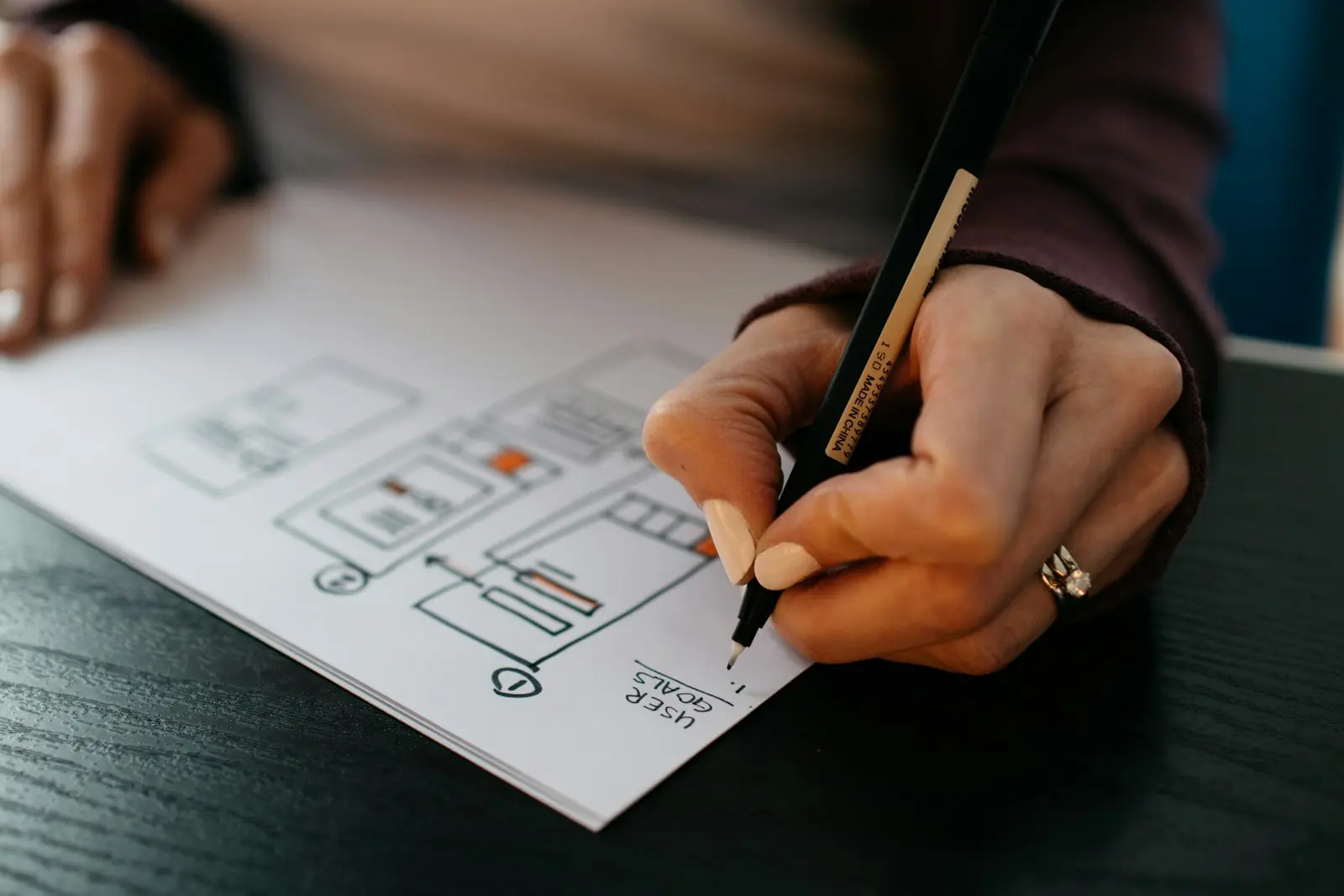
Wireframes show the layout and content of key pages without colours. Once approved, the visual design applies your brand and is checked on mobile first, since most visitors arrive on phones.
4. Content
- Clear headlines that say what you do and for whom
- Service pages written for real customer questions
- Real photos of your team, work and premises
- Proof: client logos, case studies, reviews, certifications
- Strong calls to action – call, WhatsApp, enquire
5. Development
Developers build the pages, connect a content management system so you can edit text and images, set up enquiry forms, WhatsApp buttons, payment gateways or booking systems, and connect tools like your CRM.
6. Testing, speed and SEO
- Test on phones, tablets and browsers.
- Optimise images and code for fast Core Web Vitals.
- Add titles, descriptions, structured data, a sitemap and redirects from any old pages.
- Secure the site: HTTPS, updates, backups and protected forms.
7. Launch and growth
After launch, connect Google Search Console and analytics, set up your Google Business Profile, and keep publishing useful content. A website improves most in the months after launch, when you can see what visitors actually do.
Planning a new site? See our website development services in Kerala, our guide to website costs, and SEO services.
Frequently asked questions
How long does website development take?
A business website usually takes three to six weeks; e-commerce and web applications take longer. Content readiness is often what decides the timeline.
Should I use WordPress or a custom website?
WordPress suits many content sites. A custom build suits sites with special features, high performance or security needs. A good developer will recommend based on your goals, not their habit.
Who owns the website after it is built?
You should. Make sure the domain, hosting, code and content are in your name or transferred to you.