

Robotics and AI labs turn abstract subjects into things students can build, test and improve. They teach electronics, programming, problem-solving and teamwork in one place – and give students a real head start for engineering and technology careers.
What a lab needs at each level
| Level | Focus | Typical tools |
|---|---|---|
| Primary and middle school | Logic, sensors and simple machines | Block-coding robot kits |
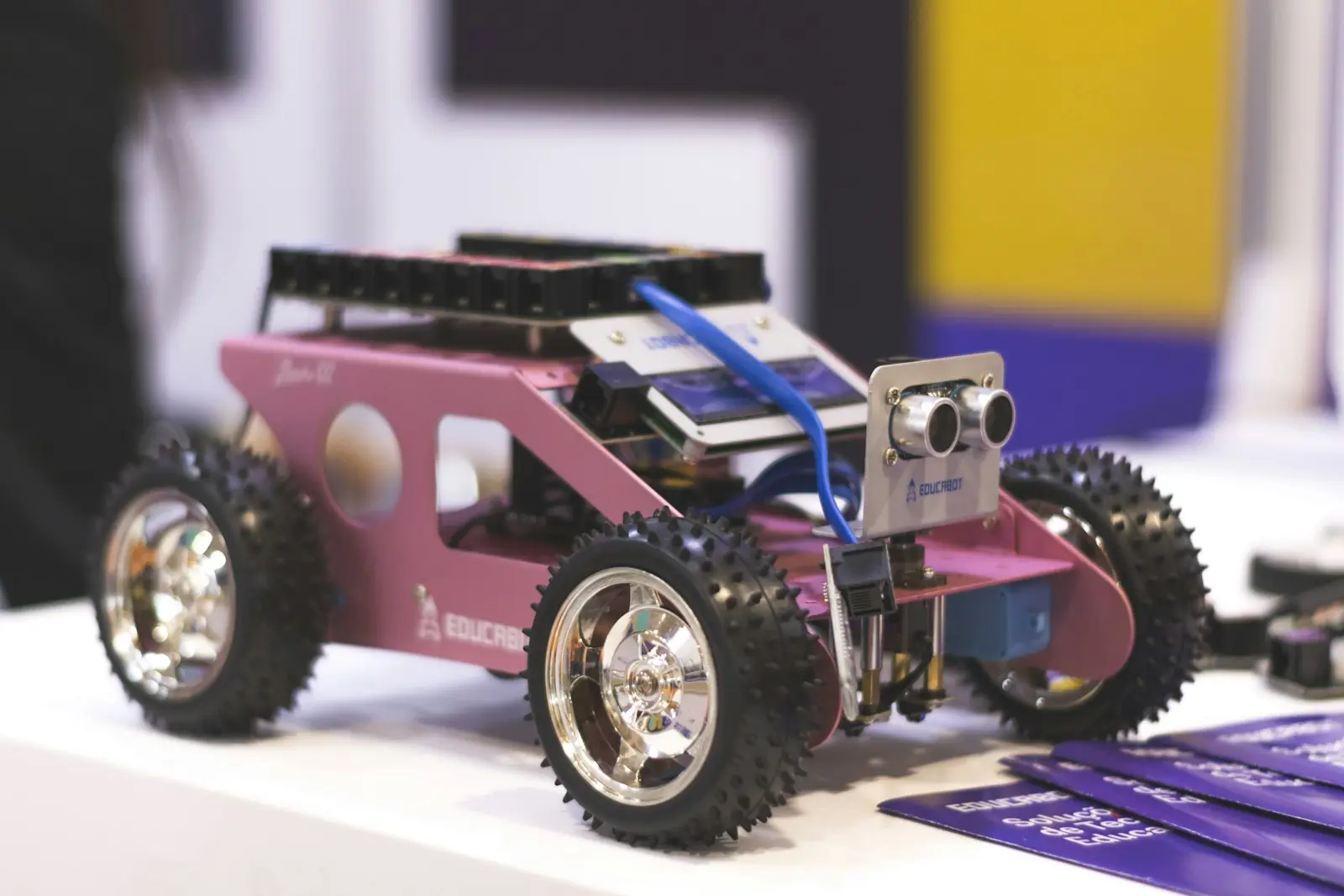
| High school | Electronics and text-based coding | Arduino, sensors, Python, 3D printing |
| College and engineering | Autonomy, vision and AI | ROS, Raspberry Pi/Jetson, cameras, drones |
Planning your lab
- Define outcomes – what should students be able to build by the end of each year?
- Choose a curriculum with lesson plans, projects and assessments.
- Select kits that match the curriculum and can be reused and upgraded.
- Prepare the space – benches, storage, power, safety and display areas.
- Train teachers so the lab runs without depending on outside experts.
- Plan events – exhibitions, hackathons and competitions.
Project ideas that keep students engaged
- Line-following and obstacle-avoiding robots
- Smart irrigation with soil-moisture sensors
- Home automation with IoT and voice control
- Object and face recognition with a camera
- Small autonomous rovers using ROS
Safety and maintenance
Set clear rules for soldering, batteries and moving parts, keep a first-aid kit nearby and store components labelled. An annual maintenance plan covers worn parts, spares, software updates and new kits as the curriculum grows.
Frequently asked questions
Do teachers need a technical background?
No. A good programme includes step-by-step lesson plans and hands-on training so any motivated teacher can run sessions.
Can the lab support competitions?
Yes – competitions and exhibitions are one of the best ways to keep students motivated and showcase the institution.
The bottom line
A lab succeeds when curriculum, kits and trained teachers come together. Tinos RoboLab provides kits, lesson plans, teacher training and competition support for schools and colleges, backed by our robotics wing in Kochi. Talk to us about a lab for your institution.